

- Blog
- 23 Dec 2025

Proper nutrition is the cornerstone of veterinary preventative medicine. For both dogs and cats, the goal of a feeding strategy isn't just to provide calories, but to support metabolic health, prevent chronic inflammation, and manage life-stage-specific needs.
1. Species-Specific Nutritional Needs
Cats: The Obligate Carnivore
Cats have unique metabolic pathways that require animal-based proteins.
-
High Protein Requirement: Cats use protein for energy even when carbohydrates are available.
-
Essential Nutrients: They cannot synthesize Taurine (essential for heart/eye health) or Arachidonic acid from plant sources.
-
Hydration Focus: Cats have a low thirst drive. Incorporating wet food is often a mechanical necessity to prevent Feline Lower Urinary Tract Disease (FLUTD) and kidney issues.
Dogs: The Adaptive Omnivore
Dogs are more flexible but still thrive on a meat-first profile.
-
Carbohydrate Utilization: Unlike cats, dogs can effectively digest cooked starches for energy.
-
Size-Specific Needs: Large-breed puppies require controlled calcium-to-phosphorus ratios to prevent rapid growth that leads to hip and joint dysplasia.
2. Strategic Feeding Methods
A. Measured Meal Feeding (Recommended)
Instead of "free-feeding" (leaving a bowl out), provide specific amounts at set times.
-
Benefit: Allows for immediate detection of anorexia (often the first sign of illness).
-
Metabolic Control: Prevents the "constant graze" that keeps insulin levels spiked, leading to obesity.
B. Puzzle & Interactive Feeders
Using slow-feeders or treat puzzles mimics natural foraging behavior.
-
Cognitive Health: Reduces boredom and anxiety-related behaviors.
-
Physical Health: Prevents "scarf and barf" (regurgitation from eating too quickly).
3. Life-Stage Adjustments
|
Life Stage |
Focus Area |
Key Nutrient Adjustment |
|---|---|---|
|
Puppy/Kitten |
Tissue & Brain Growth |
High DHA (Omega-3) & Protein |
|
Adult (Active) |
Maintenance |
Balanced Caloric Intake |
|
Senior |
Joint & Kidney Support |
Reduced Phosphorus, High-Quality Protein |
4. The "Body Condition Score" (BCS) Strategy
The number on the scale matters less than the shape of the animal. A healthy feeding strategy aims for a BCS of 4 or 5 out of 9:
-
The Rib Check: You should be able to feel the ribs easily with a light touch (like the back of your hand), but not see them prominently.
-
The Waistline: When viewed from above, the pet should have a clear "hourglass" tuck behind the ribs.
5. Common Nutritional Pitfalls to Avoid
-
Human Food Toxicity: Avoid onions, garlic, grapes, raisins, and Xylitol (found in sugar-free peanut butter), which are highly toxic to pets.
-
Over-Treating: Treats should never exceed 10% of total daily caloric intake.
-
Home-Cooked Imbalance: Without a veterinary nutritionist’s formulation, home-cooked diets often lack critical micro-minerals like Zinc or Copper.
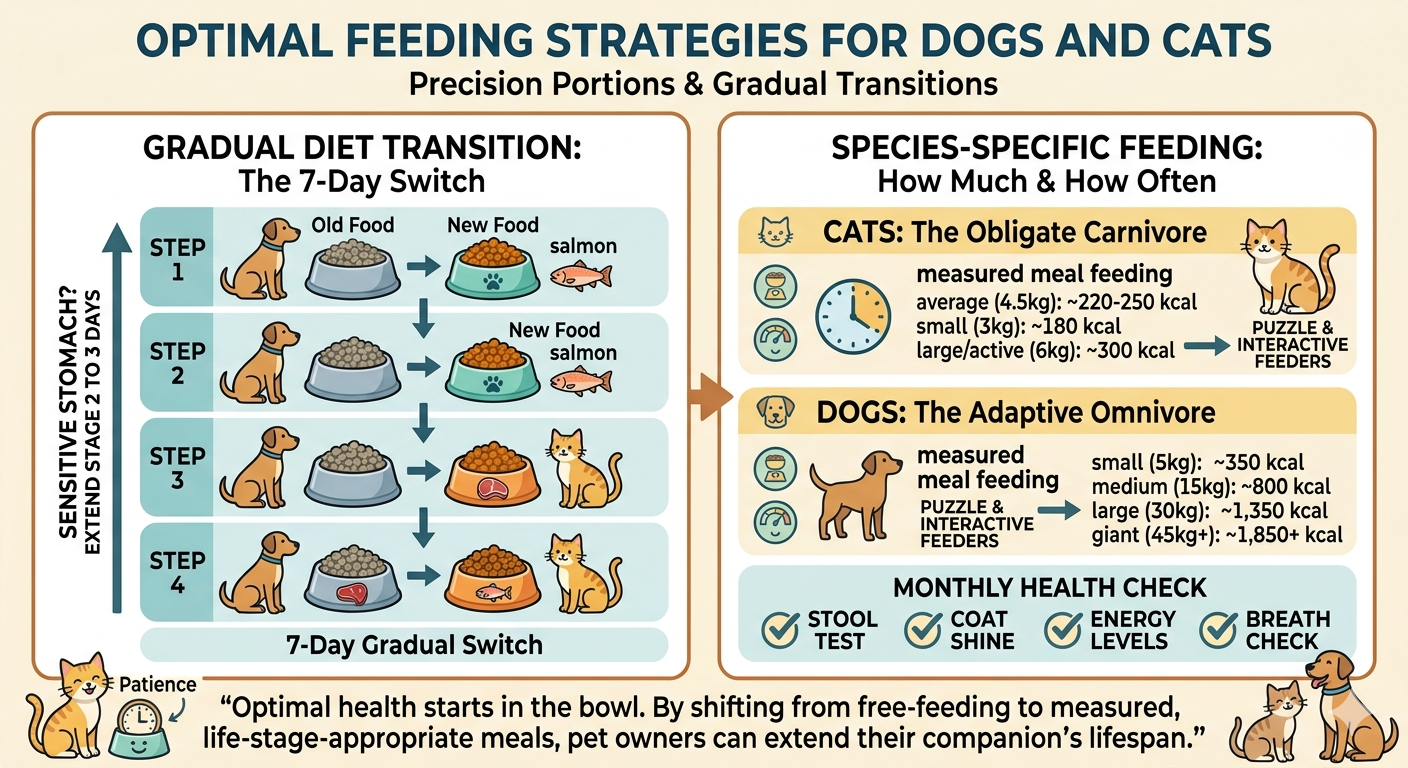
"Optimal health starts in the bowl. By shifting from free-feeding to measured, life-stage-appropriate meals, pet owners can extend their companion's lifespan by an average of 2 years and significantly reduce the risk of diabetes and osteoarthritis."
Daily Caloric Intake: General Guidelines
While every pet is unique, these are the average caloric requirements (kcal/day) for adult, neutered dogs and cats with moderate activity levels.
For Dogs
-
Small (5kg): ~350 kcal
-
Medium (15kg): ~800 kcal
-
Large (30kg): ~1,350 kcal
-
Giant (45kg+): ~1,850+ kcal
For Cats
-
Average (4.5kg): ~220–250 kcal
-
Small (3kg): ~180 kcal
-
Large/Active (6kg): ~300 kcal
Fundamentals of Balanced Nutrition
Nutrition is one of the most important determinants of an animal’s overall health, growth, and longevity. A balanced diet provides essential nutrients—proteins, fats, carbohydrates, vitamins, and minerals—that support immune function, organ systems, and cellular processes. Pets require diets tailored to their species, age, size, activity level, and physiological state. Inadequate or imbalanced diets can lead to immune suppression, poor growth, metabolic disorders, and reduced life expectancy.
Proteins are crucial for tissue repair and immune competence, while fats serve as concentrated energy sources and support skin and coat health. Carbohydrates provide readily available energy, although their inclusion must be balanced to prevent excess weight gain. Vitamins and minerals are necessary for enzymatic reactions, bone health, and electrolyte balance.
Life Stage and Condition‑Specific Feeding
Nutritional requirements vary throughout a pet’s lifespan. Puppies and kittens, in their rapid growth phases, have higher protein and energy needs compared to adults. Senior animals often require diets formulated to maintain lean muscle mass, support joint health, and prevent obesity. Pets with specific medical conditions—such as renal disease, diabetes, gastrointestinal disorders, or obesity—benefit from therapeutic diets designed to address those health challenges. Prescription diets, when recommended by a veterinarian, can improve clinical outcomes and quality of life.
Practical Dietary Management in Daily Care
Effective nutrition involves more than selecting a high‑quality commercial diet. Feeding practices should promote regular, portion‑controlled meals and discourage free‑feeding in animals prone to weight gain. Owners should monitor body condition scores and adjust feeding regimens accordingly. Hydration is equally important; fresh water should be available at all times to support renal function and digestion, especially in cats predisposed to urinary tract issues.
Veterinary guidance is essential when selecting diets, evaluating nutritional adequacy, and adjusting plans for pets with special requirements. Periodic reassessment during wellness exams ensures that nutritional strategies remain aligned with the animal’s evolving needs.