


- Blog
- 06 Apr 2026

Feline Calicivirus (FCV) is a highly contagious virus that is one of the major causes of upper respiratory infections (URIs) in cats. It is found worldwide and affects domestic and wild felines of all ages, though kittens are particularly vulnerable.
1. Transmission
The virus is shed through saliva and secretions from the nose and eyes. It is transmitted via:
-
Direct Contact: Physical interaction with an infected cat.
-
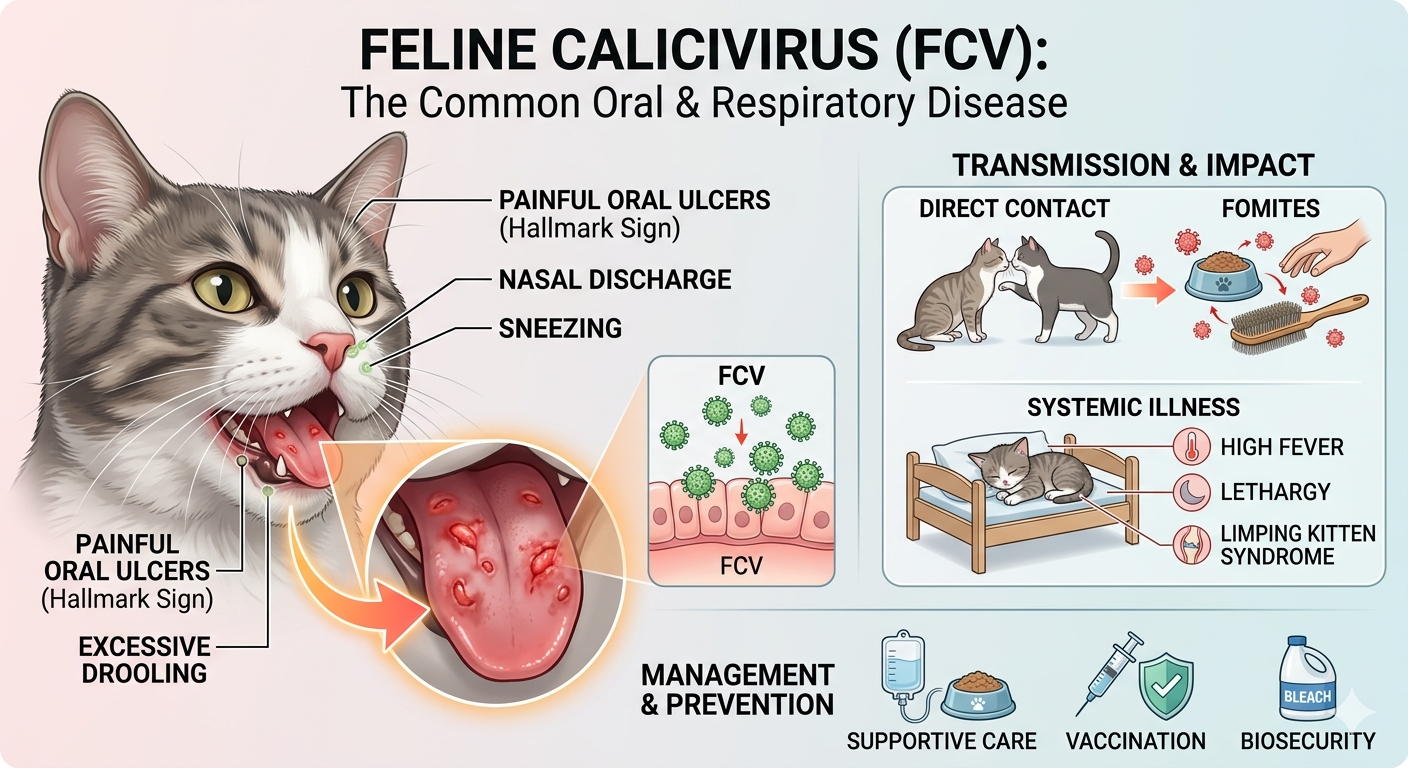
Fomites: Contaminated objects such as food bowls, bedding, and human hands. FCV is a "naked" virus, meaning it lacks an envelope, making it quite hardy and able to survive on surfaces for up to a week.
-
Aerosolization: Large droplets expelled through sneezing.
2. Clinical Symptoms
The presentation of FCV can vary depending on the strain of the virus, but common signs include:
-
Oral Ulcerations: This is the hallmark of FCV. Painful ulcers typically appear on the tongue, hard palate, or gums, often leading to drooling and a refusal to eat.
-
Respiratory Distress: Sneezing, nasal congestion, and discharge from the eyes and nose.
-
Fever and Lethargy: General malaise and a high body temperature.
-
"Limping Kitten Syndrome": Some strains cause transient joint inflammation, leading to lameness and pain when moving.
-
Virulent Systemic FCV (VS-FCV): A rare but highly fatal mutated form that causes high fever, swelling of the face and limbs, and organ failure.
3. Diagnosis
Veterinarians usually diagnose FCV based on clinical signs, particularly the presence of oral ulcers. Confirmation can be made through:
-
PCR Testing: Swabbing the throat or eyes to detect viral RNA.
-
Viral Isolation: Growing the virus in a lab setting (less common in clinical practice).
4. Treatment and Management
There is no specific antiviral drug for FCV, so treatment is primarily supportive:
-
Pain Management: Crucial for cats with painful oral ulcers.
-
Hydration: Fluids (subcutaneous or IV) if the cat is dehydrated.
-
Nutritional Support: Offering highly palatable, soft, warmed-up food to encourage eating despite mouth pain.
-
Antibiotics: May be prescribed to treat secondary bacterial infections.
5. Prevention
-
Vaccination: The FCV vaccine is considered a "core" vaccine. While it may not prevent infection entirely, it significantly reduces the severity of the disease.
-
Hygiene: Cleaning contaminated areas with a 1:32 dilution of bleach (most standard disinfectants do not kill FCV).
-
Isolation: Keeping infected cats away from healthy ones until the shedding period has passed.