


- Blog
- 11 Apr 2026

Managing Tick Infestations: A Comprehensive Guide for Pet and Livestock Owners
Tick season is more than just a nuisance; it is a significant clinical concern for both companion animals and small ruminants. As external parasites, ticks are proficient vectors for various debilitating diseases. Understanding how to identify, prevent, and manage these infestations is critical for maintaining animal health and welfare.
1. The Clinical Impact of Ticks
Ticks do more than just bite; they transmit pathogens that can lead to severe systemic illness.
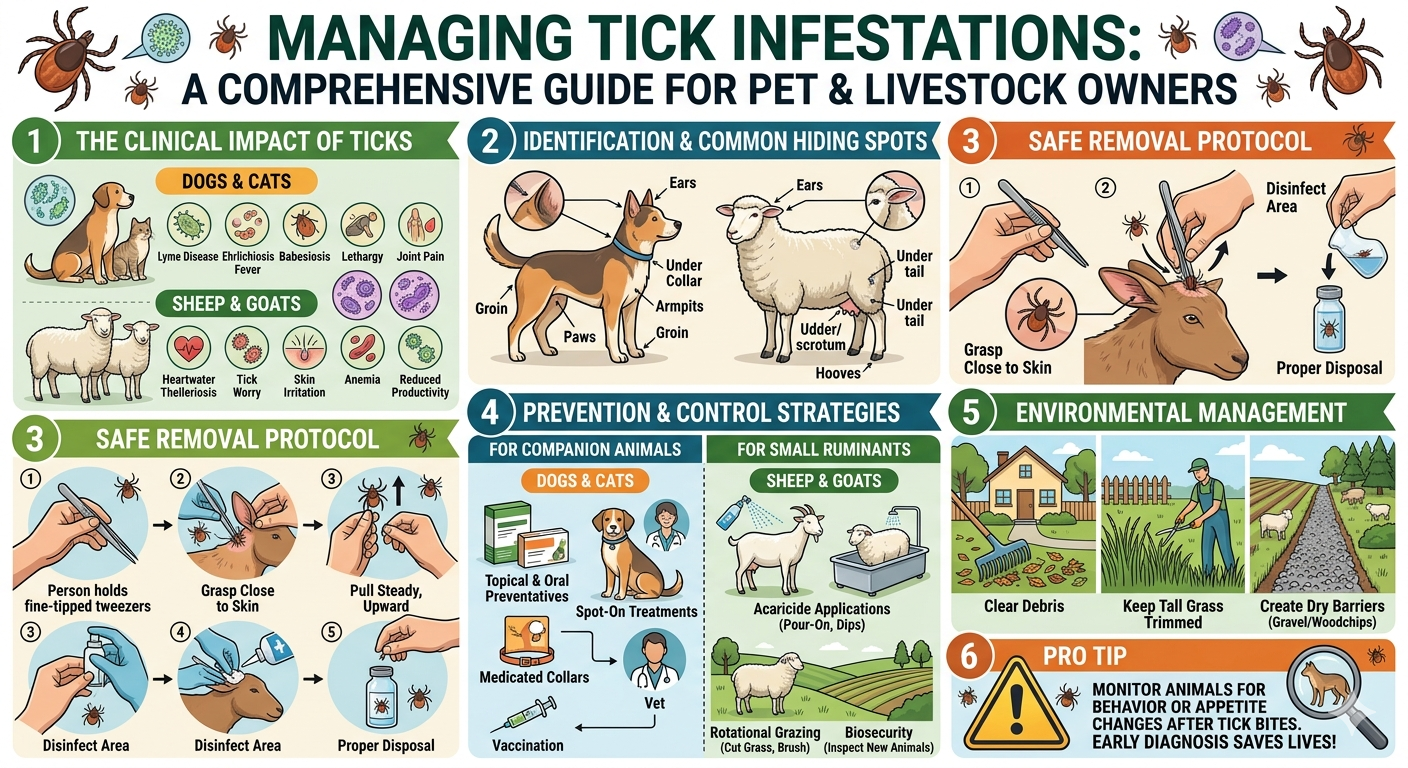
In Dogs & Cats: Ticks are primary vectors for Lyme Disease, Ehrlichiosis, Anaplasmosis, and Babesiosis. Symptoms often include lethargy, joint pain, fever, and in severe cases, anemia or organ failure.
In Sheep & Goats: Beyond skin irritation and wool/hair loss, ticks transmit Heartwater (Cowdriosis) and Theileriosis. Heavy infestations can lead to significant blood loss (anemia), especially in young lambs and kids, and may predispose animals to secondary bacterial infections or "tick worry," which reduces grazing time and productivity.
2. Identification and Common Hiding Spots
Ticks prefer warm, moist areas with thin skin. Regular "tick checks" should focus on the following regions:
|
Animal Type |
Key Inspection Areas |
|---|---|
|
Dogs & Cats |
Between toes, inside ears, under the collar, "armpits," and around the groin. |
|
Sheep & Goats |
Under the tail, the udder or scrotum, the ears, and the interdigital spaces (between the hooves). |
3. Safe Removal Protocol
If you find a tick, immediate and proper removal is essential to minimize the risk of pathogen transmission.
Use the Right Tool: Use fine-tipped tweezers or a specialized tick-removal tool.
The Technique: Grasp the tick as close to the skin's surface as possible (the mouthparts). Pull upward with steady, even pressure. Do not twist or jerk, as this can cause the mouthparts to break off and remain in the skin.
Disinfect: Clean the bite area and your hands with rubbing alcohol or soap and water.
Disposal: Submerge the tick in alcohol or flush it down the toilet. Never crush a tick with your fingers.
4. Prevention & Control Strategies
Effective management requires a multi-faceted approach involving the animal, the environment, and pharmacological intervention.
For Companion Animals (Dogs & Cats)
Topical & Oral Preventatives: Consult with a professional to select the appropriate spot-on treatments, oral chews, or medicated collars. Many modern options provide 4–12 weeks of continuous protection.
Vaccination: In endemic areas, consider the Lyme disease vaccine for dogs.
For Small Ruminants (Sheep & Goats)
Acaricide Applications: Use approved "pour-on" treatments or dips. Ensure dosage is calculated accurately based on weight to prevent resistance.
Pasture Management: Keep pastures trimmed. Ticks thrive in tall grass and brush. If possible, implement rotational grazing to break the tick life cycle.
Biosecurity: Inspect any new animals thoroughly for parasites before introducing them to the main flock.
5. Environmental Management
Ticks spend a large portion of their life cycle off the host.
Clear Debris: Remove leaf litter and tall weeds from around kennels and barns.
Barriers: Create a dry barrier (like gravel or woodchips) between wooded areas and animal enclosures to discourage tick migration.
Pro Tip: Always monitor animals for changes in behavior or appetite following a tick discovery. Early diagnosis of tick-borne diseases significantly improves the prognosis.