


- Blog
- 07 Apr 2026

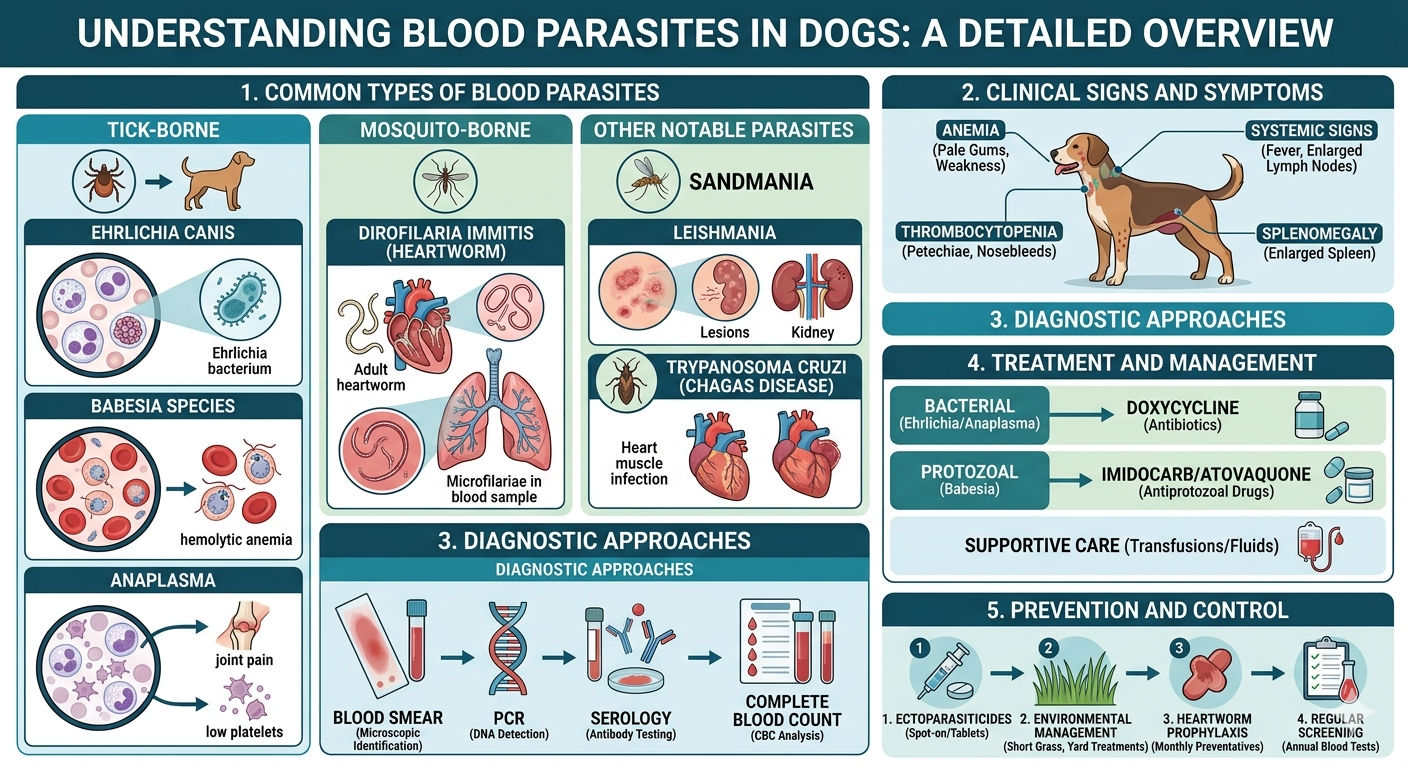
1. Common Types of Blood Parasites
Tick-Borne Pathogens
-
Ehrlichia canis (Ehrlichiosis): A rickettsial bacterium that infects white blood cells. It typically progresses through three stages: acute (fever, lethargy), subclinical (no symptoms but the parasite persists), and chronic (bone marrow suppression).
-
Babesia species (Babesiosis): Protozoal parasites (e.g., B. canis, B. gibsoni) that invade and destroy red blood cells (RBCs), leading to hemolytic anemia.
-
Anaplasma (Anaplasmosis): Similar to Ehrlichia, these infect platelets (A. platys) or white blood cells (A. phagocytophilum), often causing joint pain and fever.
Mosquito-Borne Pathogens
-
Dirofilaria immitis (Heartworm): While technically a nematode (worm), the larvae (microfilariae) circulate in the blood. They eventually mature into adults that live in the pulmonary arteries and heart.
Other Notable Parasites
-
Leishmania: Transmitted by sandflies; it affects the blood and various organs, often manifesting with skin lesions and kidney issues.
-
Trypanosoma cruzi (Chagas Disease): Transmitted by "kissing bugs," affecting heart muscle and blood.
2. Clinical Signs and Symptoms
Symptoms vary depending on the specific parasite, but common clinical presentations include:
-
Anemia: Pale gums, weakness, and rapid breathing.
-
Thrombocytopenia: Low platelet counts leading to "petechiae" (small purple spots on skin/gums) or nosebleeds.
-
Systemic Signs: Intermittent fever, lymph node enlargement, and loss of appetite.
-
Splenomegaly: Enlargement of the spleen as it works to filter infected cells.
3. Diagnostic Approaches
4. Treatment and Management
Treatment must be tailored to the specific organism:
-
Rickettsial/Bacterial (Ehrlichia/Anaplasma): Typically managed with tetracycline-class antibiotics, most commonly Doxycycline.
-
Protozoal (Babesia): Requires specific antiprotozoal drugs such as Imidocarb dipropionate or a combination of Atovaquone and Azithromycin.
-
Supportive Care: In severe cases of anemia, blood transfusions or fluid therapy may be necessary to stabilize the patient.
5. Prevention and Control
The most effective strategy is Vector Control:
-
Ectoparasiticides: Monthly administration of spot-on treatments, oral tablets (e.g., isoxazolines), or medicated collars to kill ticks and fleas.
-
Environmental Management: Keeping grass short and using yard treatments to reduce tick populations.
-
Heartworm Prophylaxis: Routine monthly preventatives to kill circulating microfilariae.
-
Regular Screening: Annual blood testing to catch subclinical infections before they cause irreversible organ damage.